Hospital Cloth Washing
Hospital Cloth Washing: Safe Linen Guide
Improve hospital cloth washing with safe collection, segregation, transport, wash planning, drying, storage, and staff protection.
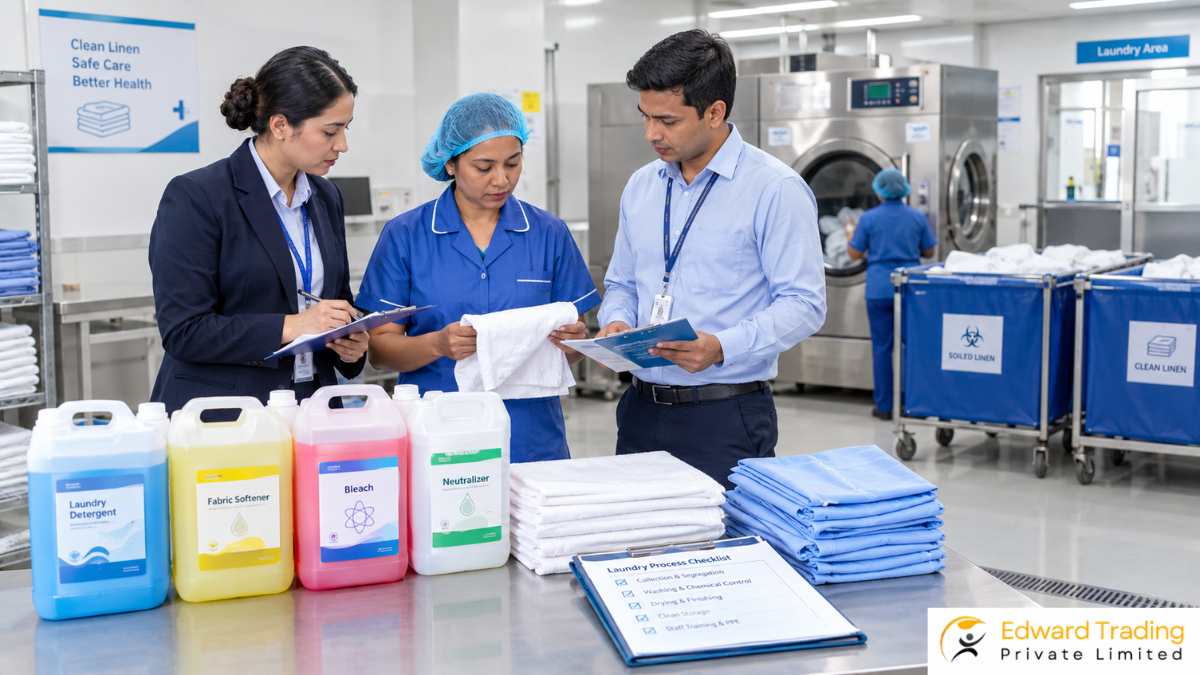
Hospital Cloth Washing: Safe Linen Guide
Hospital cloth washing isn't simply putting used linens into the washing machine and adding laundry detergent. In the healthcare environment, linens travel through patient-care zones, collection points, transport zones, laundry and clean storage. Each step must be planned to ensure that soiled and clean linen are separated, and that staff can safely manage soiled linen.
A proper hospital laundry process in the hospital, clinic, and other health care institutions in Nepal should be similar to the type of linen, level of soil, equipment available, water condition, chemical programme, and hospital laundry procedure. This guide covers some of the key areas to consider when purchasing laundry chemicals, equipment or laundry services.
What Hospital Cloth Washing involves
A good hospital cloth washing programme starts at the point where linen is removed from use. It should cover collection, segregation, containment, transport, washing, drying, finishing, storage, and redistribution. The aim is not simply to make linen look clean; the process should be controlled and repeatable.
This is where healthcare linen washing differs from ordinary commercial laundry. Bed sheets, patient gowns, towels, staff garments, operating-room textiles, and other items may have different fabric characteristics and handling requirements. Facilities should therefore avoid treating every load as if it were identical.
For facility planning, Edward Trading’s hygiene and housekeeping solutions can be reviewed alongside the facility’s own laundry requirements and SOPs.
Key stages of a hospital laundry process
1. Collection at the point of use
Clothing that is soiled should be treated as sparingly as possible. Staff should wear the PPE and infection prevention equipment supplied by the facility, not unnecessarily shake up or put dirty linen in the provided container. Consistency in collection will minimise unnecessary handling and facilitate downstream sorting.
2. Soiled linen handling and segregation
Soiled linen handling should be based on the hospital’s policy and the condition of the linen. Containers need to be properly labeled, appropriate for the contents, and controlled to ensure that soiled and clean linen are not combined with clean transport equipment. Routes and collection times should also be planned to minimise unnecessary contact with public areas or clean areas.
3. Washing and chemical control
The wash cycle must be compatible with the textile, soil, machine, temperature, cycle time and chemical system. Depending on the formula chosen, hospital laundry chemicals can contain detergents, builders or alkalis, bleaching or destaining products, neutralisers and finishing products. Not all the strongest products is the correct product, compatibility, dosing, fabric protection, safety information and repeatable results are important.
4. Drying, finishing, and clean storage
After washing linen it should be dried thoroughly and processed in a clean space. Completed bed linens require protection from dust, moisture and unnecessary contact. Equipment for soiled linen should be kept away from clean carts, shelves and storage spaces.
How to choose a Hospital Cloth Washing solution
Before requesting a quotation, prepare a short requirement rather than asking for a generic list of products. Include the facility type, approximate linen volume, types of fabric, common soil or stain problems, machine capacity, water conditions if known, current wash method, desired delivery location, and any documentation or training requirements.
- Collection and segregation procedures are clearly defined.
- Containers and transport routes support separation of clean and soiled linen.
- Wash cycles are suitable for the textile and the facility's risk assessment.
- Chemical dosing can be measured and controlled consistently.
- Drying, finishing, and clean storage are included in the workflow.
- Staff responsibilities, training, monitoring, and incident procedures are documented.
When comparing suppliers, ask for the exact product name or code, pack size, proposed use, dosing instructions, technical information, safety documentation, delivery scope, warranty where applicable, and commercial terms. A detailed quotation makes it much easier to compare two proposals fairly.
Hospital laundry chemicals: what should buyers check?
Avoid only paying attention to the cost of the container when picking a hospital laundry chemical. The amount per kg of dry linen or per standard load, rewash, damage to fabric, water and energy consumption, labour usage and equipment requirements would be better to take into consideration.
Question if the suggested chemistry will work for the machines and linen in the facility. Look at existing labels and technical and/or safety information, and ensure that documentation matches the product being quoted. Clarify the installation, calibration, maintenance, training and ongoing support if dosing equipment is proposed.
For background on healthcare environmental cleaning and laundry-related infection-control practices, consult the CDC healthcare-associated infection guidance and adapt procedures to the facility’s own policies and applicable requirements.
What affects the cost of hospital cloth washing?
The visible chemical price is only one part of the total cost. A hospital should consider detergent and other chemistry, water, energy, labour, dosing equipment, machine capacity, rewash, damaged or rejected linen, repairs, replacement, transport, and storage.
For repeat procurement, consumption planning is especially important. A slightly different pack price can become significant when a facility washes large volumes every week. Ask suppliers to explain their assumptions so the comparison is based on cost in use rather than headline price.
Documentation, safety, and supplier support
Clear documentation is a plus in healthcare procurement. Relevant records can contain technical data, existing labels or instructions, safety data sheets, manufacturer information, dosing information, warranties, installation and maintenance information.
Use only qualified and supported claims like “best” or “number one.” Verify product availability, specifications, delivery, training and support in writing. If the laundry programme is important to the day to day running of the hospital, discuss reorder planning arrangements and what would happen if a product is out of stock.
You can also review Edward Trading’s partner companies to understand the brands and categories published by the company, while confirming the exact current product scope before placing an order.
Common mistakes to avoid
- Shaking soiled linen unnecessarily during collection or sorting.
- Mixing clean and soiled carts, containers, or transport routes.
- Using one wash formula for every textile and soil condition.
- Adding more chemical when the real problem is dosing, water quality, loading, or cycle control.
- Comparing products only by pack price instead of cost in use.
- Skipping staff training or leaving responsibilities unclear.
- Failing to confirm documentation, delivery, warranty, and repeat-supply arrangements.
Why consider Edward Trading?
Edward Trading Pvt. Ltd. is based in Kathmandu and supplies healthcare, hygiene, cleaning, surgical, and hospital-related product categories for institutional buyers in Nepal. Its published approach focuses on understanding requirements, recommending a suitable option, coordinating supply, and supporting continuity. Exact product availability, specifications, and commercial terms should be confirmed for each current requirement.
To understand the broader product categories available, visit the Edward Trading homepage and use the current inquiry route for a product-specific discussion.
Conclusion: build a dependable Hospital Cloth Washing process
The most effective approach to hospital cloth washing lies in considering it a full workflow, instead of a washing step. A reliable result is achieved by safe collection, a proper process for soiled linen handling, controlled chemistry, proper wash parameters, complete drying, clean storage, and trained staff.
If your hospital, clinic, laboratory, hotel or institutional facility is considering evaluating laundry chemicals or supplies, create your specifications and operating requirements prior to getting a quote.
To get a current quotation, please contact Edward Trading with the following: Your products, quantity, delivery location and date expected.
Frequently asked questions
Should hospital linen be shaken before washing?
It should not be shaken unnecessarily. Handle soiled linen as little as practical and follow the facility’s established collection and containment procedure.
Can all hospital linen use the same wash cycle?
Not necessarily. Different programmes can be required depending on the type of fabric, colour, soil level, machine, chemical system and the procedures used at the facility.
How can a hospital request a quotation?
Specify type of linen, estimate of volume, machine specifications, process in place, chemical specifications (if applicable), delivery site, and estimate of delivery time. This means that the supplier will have enough information to quote and suggest an appropriate one.
What should a hospital laundry SOP cover?
A practical SOP can cover collection, PPE, segregation, containment, transport, washing, chemical dosing, drying, clean-area handling, storage, redistribution, incidents, staff training, and monitoring.