Laundry Solutions
Laundry Solutions in Nepal: Institutional Guide
Select laundry chemicals in Nepal for hotels, hospitals, and institutions using fabric type, soil level, water quality, dosing, safety, and wash results.
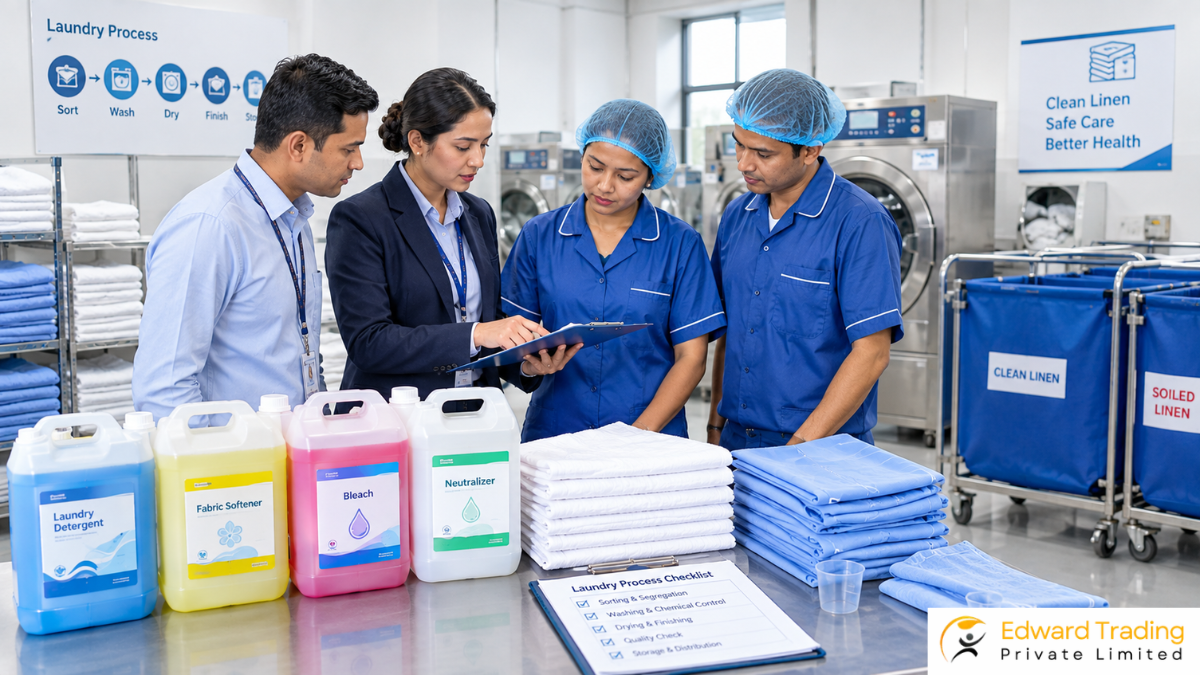
Laundry Solutions in Nepal: Institutional Guide
Sorting the linen, loading the machine with the proper products and then pressing the button to dry everything can seem simple. However, in a hotel, hospital, hotel resort, hostel or commercial laundry where there is a lot of activity, one weak step can have a negative impact on the overall outcome. Rewash, fabric damage, and increased operating costs are possible results of poor sorting, hard water, overloaded machines, incorrect dosing, weak rinsing, or incomplete drying.
This is why it makes little sense to simply compare laundry solutions in Nepal depending on the price of the detergent. A practical solution considers the workflow as a whole: linen, water, machines, chemistry, dosing, staff routines, finishing, storing and continued supply. This guide outlines the aspects that institutional buyers should consider before switching to a different process or asking for a quote.
What do Laundry Solutions in Nepal include?
Laundry solutions typically involve a combination of products, processes, equipment and support for an institutional buyer. This combination is right for a specific situation, based on the type of linen being used, the amount of linen processed on a daily basis, the type of machines available, water conditions, staffing requirements and the desired outcome for the facility.
- Laundry chemicals & wash formulas appropriate for fabric, soil, water, and machine type.
- Manual or automatic dosing systems to assist staff to apply product consistently.
- Sorting, loading, stain treatment, washing, drying, finishing, and storage procedures.
- Linen and linen fabric damage monitoring, and consumption measures.
- Document, train, troubleshoot, plan supplies and provide support when needed.
For a starting point, Edward Trading’s hygiene and housekeeping solutions can help buyers review the relevant solution category.
1. Start with the laundry process, not the product
Be familiar with your laundry before changing a chemical. Note: Linen type, approximate daily usage or number of kilograms processed, typical stains, machine capacity, load weights, cycle times, temperatures, rinse performance, drying method and water conditions (if known). A quick process review will indicate if the true issue is chemistry or a fundamental one.
There can be separate laundry processes for towels, bed linen, uniforms, restaurant linen and delicate fabrics in a hotel laundry process. Hospitals will have varying handling requirements and must tailor their process to their own infection-prevention protocols and risk assessment.
2. Build a suitable chemical programme
A commercial laundry system is typically more than one detergent. The formula can contain detergent or builder, alkali, de-stainer or bleach, neutralizer, softener, and finishing product. The choice should take into account fabric, soil, water, machine, temperature and the desired finish.
It is not the objective to use as much chemical as possible. It's about using the right product at the right dose and at the right time. Formulas are also more consistent across shifts, which is helpful when using them.
3. Match dosing to the operation
Manual dosing can be practical for smaller operations when staff have clear instructions, measuring equipment, labelled containers, and supervision. Automatic dosing can improve repeatability in higher-volume operations, but it also requires suitable equipment, maintenance, installation, and service support.
Whichever approach is used, staff should understand what each product does, where it is added, how much is required, and what checks to make when a wash does not produce the expected result.
4. Choose around the facility’s actual needs
Hotels might focus on how the bed looks, how soft it is, how quickly it can be turned, and how many times the linens will last. Hospitals might focus more on the controlled handling, processing and separation of clean and soiled linens.
Commercial laundries can be very throughput and repeatable, consume a lot of water and have a lot of cost per kg. Before you look into the laundry packages, you should consider the actual operating conditions that are present at the facilities where they will be used.
How should buyers compare suppliers?
Give suppliers the same basic information so quotations can be compared fairly: facility type, linen categories, approximate daily volume, machines and capacities, water information if available, current products, major problems, operating hours, delivery location, and target date.
- Exact product name, code or model where applicable.
- Pack size, quantity, unit price, and inclusions or exclusions.
- Recommended dosing or wash formula and important operating assumptions.
- Delivery scope, lead time, quotation validity, payment terms, and minimum order requirements.
- Installation, training, maintenance, warranty, troubleshooting, and repeat-supply arrangements where applicable.
Before relying on brand information, review Edward Trading’s partner companies and confirm the exact product and current commercial terms for your requirement.
What affects the real cost?
The lowest priced container does not always mean the lowest price. A more accurate calculation is based on cost in use, that is chemical used per kg or standard load, rewash, rejected linen, damage to linen, water, energy, labour, machine down time and early replacement of linen.
If the facility processes a high volume of items, the difference in consumption may make a huge difference over time. This can also be a result of repeated rewashing and inadequate drying. Consider the total operating expense and not just the purchase price!
Hospital and hotel laundry programmes are not identical
The design of a hospital laundry programme should be based on the categories of linen used, the infection prevention programme, the equipment and documented procedures within the hospital. Collection, transport, washing, drying and clean storage must be coordinated.
Appearance, stain removal, softness, turnaround, guest expectations, and fabric life are priorities for hotels. A good solution is a one that meets those needs and not trying to apply the same formula to all facilities.
The CDC guidance on environmental cleaning and laundry related practices is an external reference for healthcare laundry and linen handling. Guidance should be tailored to facilities' policies, equipment, risk assessment and requirements.
Common mistakes to avoid
- Changing detergent before checking sorting, loading, water quality, and machine settings.
- Comparing products by pack price instead of cost per load or kilogram.
- Allowing undocumented manual dosing or different formulas across shifts.
- Treating every linen
category as if it needs the same programme.
- Ignoring rewash, fabric damage, water, energy, labour, and linen replacement in cost calculations.
- Failing to confirm documentation, delivery, training, warranty, and repeat-supply expectations.
- Making product or performance claims that have not been verified for the exact item.
Why consider Edward Trading?
Edward Trading Pvt. Ltd. is based in Kathmandu and supplies healthcare, hygiene, cleaning, surgical, and hospital-related product categories for institutional buyers in Nepal. For a laundry requirement, a useful starting point is to explain the facility, current process, products in use, volume, equipment, and the problem that needs to be solved.
Buyers can browse Edward Trading’s solutions for the wider product range and then share the specific laundry requirement for a current quotation.
Conclusion: choose Laundry Solutions in Nepal around the whole process
The selection of the laundry operation in Nepal should begin with the laundry. Grasp what linen, workload, water, machines, chemistry, doses, staff routines, and measurable results are before determining what needs to change.
A good fit solution should help make the process more consistent, more easily monitored and more predictable with costs. Whether you are assessing an existing programme or setting up a new laundry, you should have all the information about your laundry and issues ready before you ask for a quotation.
To discuss a specific requirement, contact Edward Trading for a quotation with your facility type, linen volume, machine details, product requirements, delivery location, and timeline.
Frequently asked questions
What should I share when requesting Laundry Solutions in Nepal?
Provide information on the type of the facility, linen types, estimated daily usage, machines and capacities, water data (if available), existing product list, major issues, where the linen is delivered and the desired timeline.
Is a commercial laundry system only about chemicals?
No. This can cover wash chemistry, dosing, equipment, process control, staff routines, troubleshooting, performance monitoring, supply planning, and any other related aspects.
Should hotels and hospitals use the same laundry programme?
Not necessarily. The types of linen, priorities for operation, handling and risk factors may vary between them and the programme should be tailored to suit the facility.
How can a laundry reduce rewash?
Review sorting, load weight, water quality, machine settings, chemical dosing, cycle selection, rinsing, drying and staff consistency. Document the cause of each re-wash so that future re-washes can be identified.